
Understanding R-Values and What’s Recommended for New Jersey Homes
June 29, 2026

When homeowners in New Jersey talk about insulation, R-value comes up almost immediately. But for most people, it remains an abstract number on a product label rather than a practical guide to making smarter decisions about their home. Understanding what R-value actually means and how it applies to different parts of your home can change the way you think about energy loss, indoor comfort, and long-term structural health.
New Jersey sits in a climate zone that demands serious insulation planning. Winters drop well below freezing across Monmouth County and the surrounding region, while summers bring persistent humidity and heat that push cooling systems hard. A home that lacks adequate insulation in the right areas will struggle to maintain stable temperatures regardless of how new the HVAC system is. R-value is the metric that tells you whether your insulation is doing its job or falling short.
What R-Value Actually Means
The Science Behind the Number
R-value measures thermal resistance, which is a material's ability to slow the transfer of heat. The higher the R-value, the greater the resistance to heat movement. When your home is cold in winter, heat generated by your furnace naturally tries to escape through walls, ceilings, floors, and any unsealed gap it can find. Insulation with a higher R-value slows that escape, keeping warmth inside longer and reducing how hard your heating system has to work.
The "R" stands for resistance, and the value is calculated per inch of material thickness. Different insulation types achieve different R-values per inch, which is why a thin layer of spray foam can outperform a thicker layer of fiberglass batts in a tight space.
How R-Value Is Measured
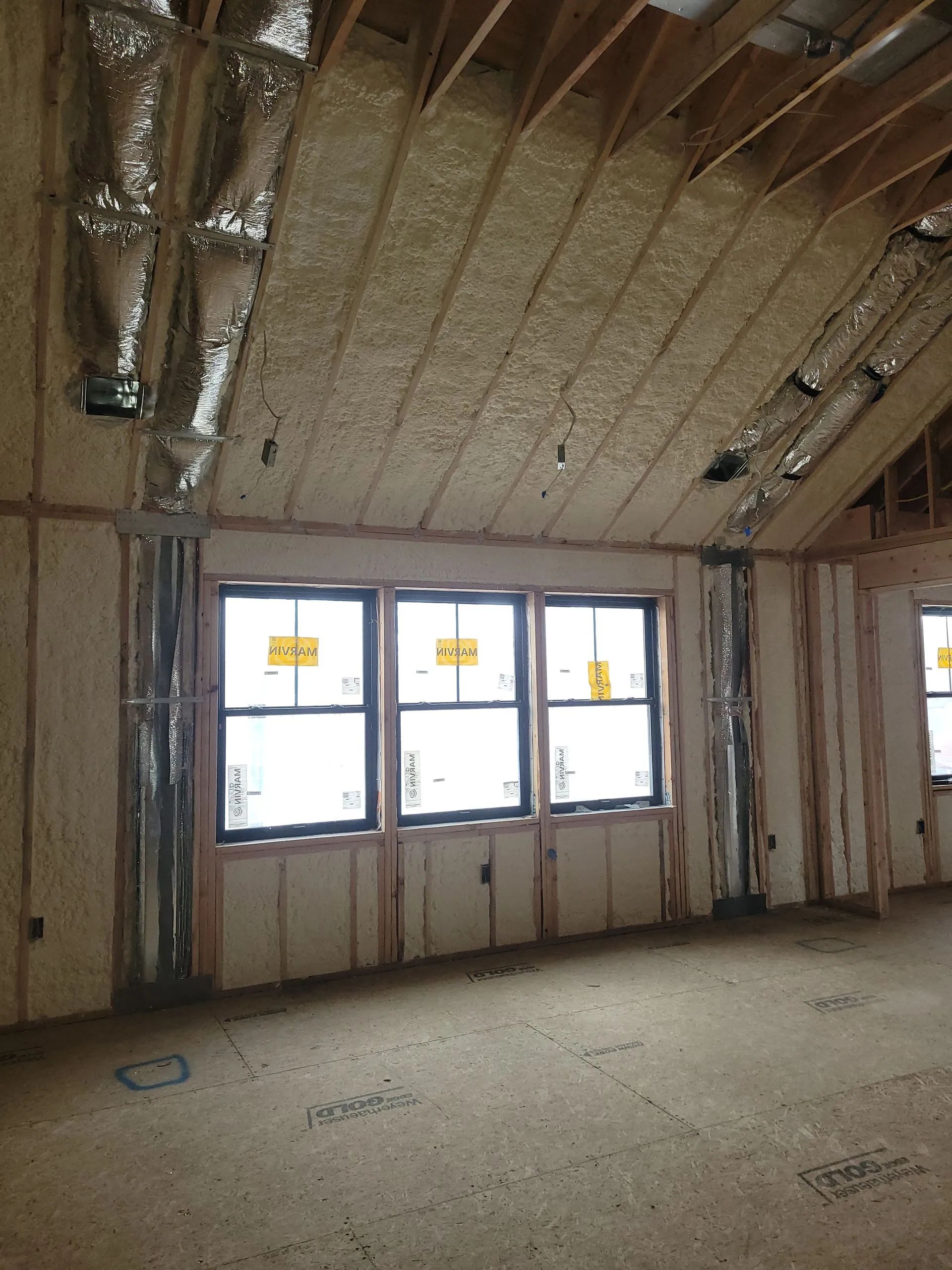
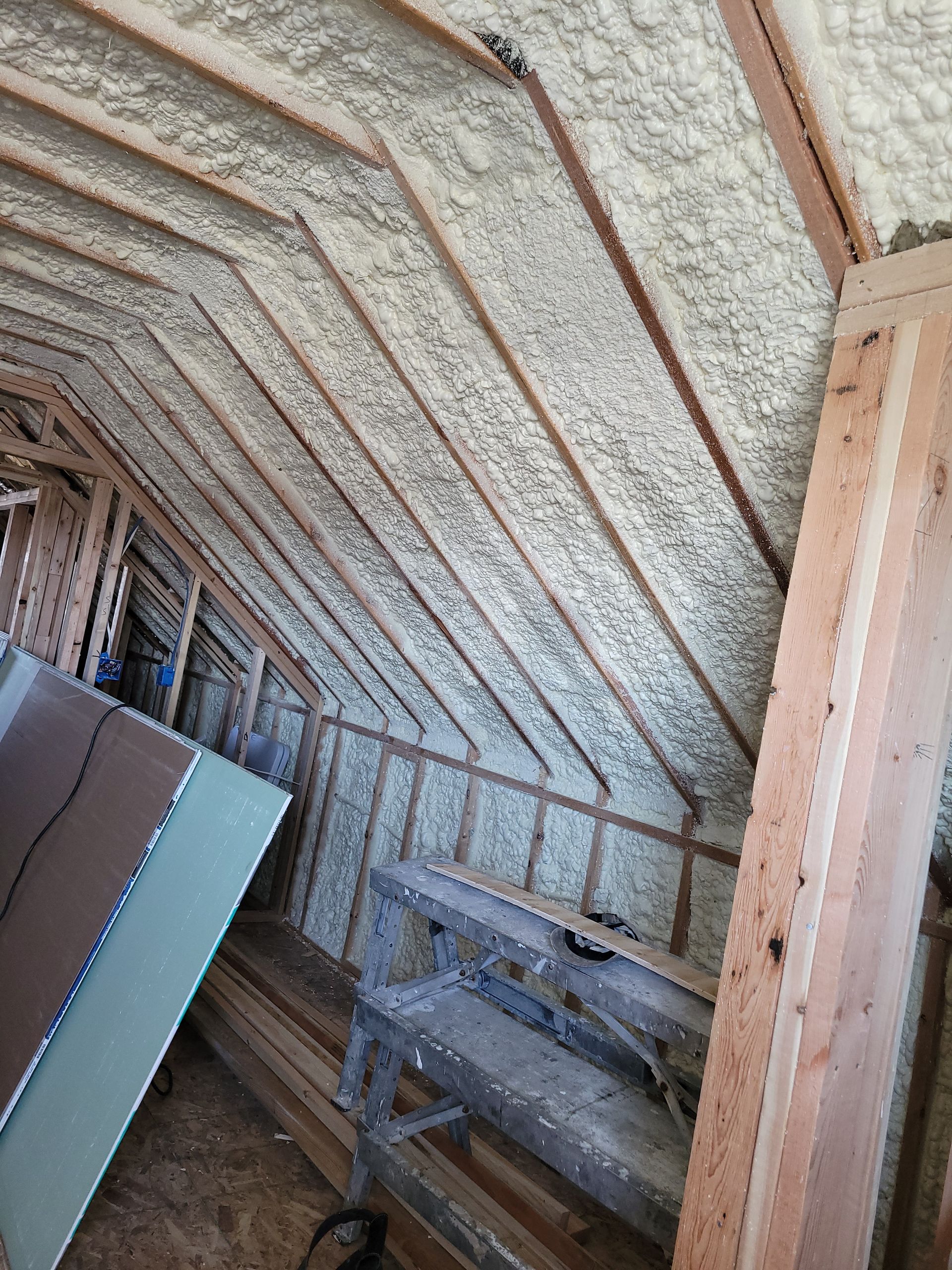
R-value is expressed as a number, typically ranging from R-1 to R-60 or higher for whole-assembly applications. A single inch of open-cell spray foam delivers approximately R-3.7, while closed-cell spray foam reaches around R-6.5 per inch. Fiberglass batts fall between R-2.9 and R-3.8 per inch. Rigid foam board varies by product but typically lands between R-3.8 and R-6.5 per inch.
These numbers matter because wall cavities, attic joists, and crawl space framing all have fixed dimensions. Knowing how much R-value a material delivers per inch helps determine whether a given product will hit the recommended target within the available space.
New Jersey Climate Zone and DOE Recommendations
Where New Jersey Falls
The U.S. Department of Energy divides the country into climate zones numbered 1 through 7, with higher numbers indicating colder climates. New Jersey primarily falls within Climate Zone 4, with the northernmost counties touching Zone 5. This classification directly shapes the recommended R-values for every part of a home.
Recommended R-Values by Location in the Home
The table below reflects DOE recommendations for Climate Zone 4, which applies to most of New Jersey including Monmouth County:
| Area of the Home | Recommended R-Value |
|---|---|
| Attic | R-49 to R-60 |
| Cathedral Ceiling | R-49 |
| Wall (2x4 framing) | R-13 to R-15 |
| Wall (2x6 framing) | R-19 to R-21 |
| Floor over unheated space | R-25 to R-30 |
| Crawl space walls | R-19 |
| Basement walls (interior) | R-11 to R-15 |
| Rim joists | R-19 to R-25 |
These are minimum recommendations for new construction and significant retrofits. Older homes often fall far below these targets, especially in attics and rim joists.
Attic Insulation: The Highest Priority Area
Why the Attic Matters Most
Heat rises. In winter, the warmest air in your home moves upward and escapes through the attic if the insulation there is insufficient. Studies from the DOE indicate that up to 25 percent of a home's heat loss occurs through the ceiling and attic plane. This makes the attic the single most impactful area to address when improving a home's thermal performance.
What R-49 to R-60 Looks Like in Practice
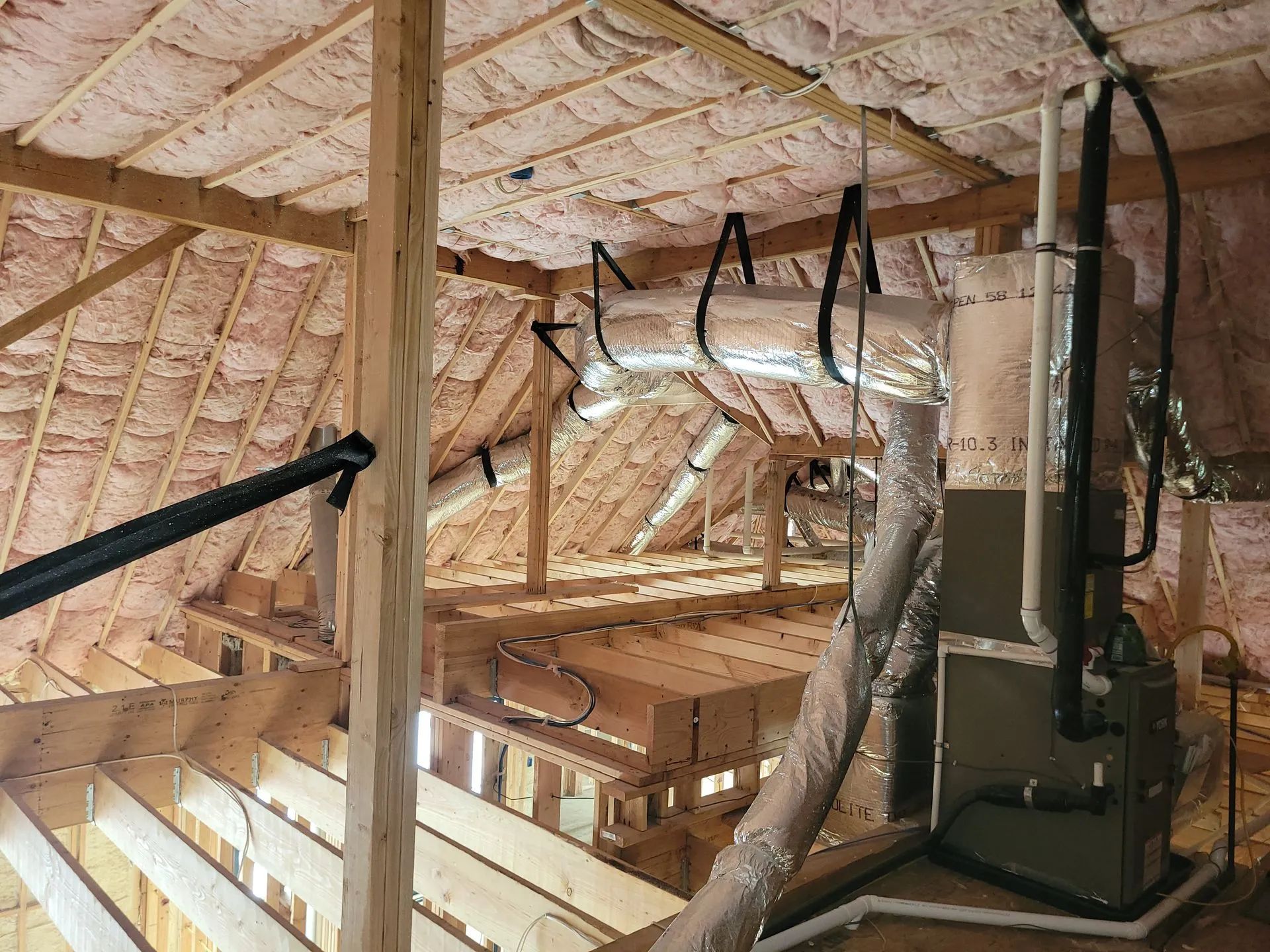
To reach R-49 using blown-in fiberglass insulation, you need approximately 14 to 16 inches of material across the attic floor. Blown-in cellulose achieves R-49 in roughly 13 to 14 inches. If your attic currently has 4 to 6 inches of older fiberglass batts, you are likely sitting around R-15, which is roughly one-third of what New Jersey homes need.
Air sealing before adding attic insulation is just as important as the insulation itself. Gaps around light fixtures, plumbing penetrations, and attic hatches allow warm air to bypass insulation entirely. We always address air sealing before increasing insulation depth, because adding material over unsealed gaps rarely delivers the performance improvement homeowners expect.
Wall Insulation: Balancing R-Value with Available Space
The Challenge of Existing Walls
Retrofitting wall insulation in an existing home is more involved than attic work. Most older New Jersey homes were built with 2x4 framing, which gives you a 3.5-inch cavity to work with. Filling that cavity with standard fiberglass batts gets you to approximately R-13. Adding rigid foam board to the exterior during a re-siding project can bring total wall R-value up to R-20 or higher.
New construction with 2x6 framing provides a 5.5-inch cavity, allowing for R-19 batts or dense-pack cellulose, with room to add exterior continuous insulation for additional thermal resistance.
Thermal Bridging and Why It Matters
Wood framing itself conducts heat, a phenomenon called thermal bridging. Even if the insulation between studs meets R-value targets, the studs themselves provide a path for heat to travel. Continuous exterior insulation applied over the sheathing breaks that bridge by covering the framing, which is why building scientists often recommend it as part of a complete wall assembly rather than relying entirely on cavity insulation.
Crawl Spaces, Basements, and Rim Joists
The Overlooked Zones
Many homeowners focus on attic and wall insulation and overlook the lower portions of the building envelope. Crawl spaces and basements are responsible for a significant share of moisture intrusion, cold floors, and pipe vulnerability during winter freezes. In New Jersey, where ground temperatures drop considerably from December through February, this lower zone deserves serious attention.
Crawl Space Insulation Approaches
There are two primary strategies for crawl spaces: insulating the floor above the crawl space to keep conditioned air from dropping into an unconditioned zone, or encapsulating the crawl space entirely and insulating its walls to bring the space inside the thermal envelope. Encapsulation is generally the more comprehensive solution because it also controls moisture, which is a major concern in coastal and near-coastal areas of Monmouth County.
Rim Joists
Rim joists are the short pieces of framing that sit at the top of your foundation wall and support the floor system above. They are exposed to outdoor temperatures and are often uninsulated in older homes. Cutting and fitting rigid foam directly against rim joists, sealed with spray foam around the edges, is one of the most straightforward and impactful insulation upgrades in a home with a basement or crawl space.
Real Expertise Behind Every Insulation Recommendation We Make
R-value is not just a technical spec. It is a practical measure of how well your home holds heat in winter, resists heat in summer, and protects your comfort across New Jersey's demanding climate swings. Prioritizing the attic, sealing air leaks before adding insulation, addressing rim joists, and understanding the limits of wall cavity depth are all part of making sound decisions about where insulation dollars have the most impact. Every home is different, and the right approach depends on existing conditions, framing dimensions, and whether the goal is a targeted upgrade or a whole-home improvement.
At Top to Bottom Insulation, we bring 15 years of hands-on insulation experience to homeowners across Monmouth County, NJ. We specialize in residential insulation installations and upgrades, covering everything from attic blow-in projects and crawl space encapsulation to rim joist sealing and full wall assemblies. Our work is guided by building science principles, current DOE recommendations, and a deep familiarity with the specific challenges that New Jersey's climate presents. We assess each home before recommending a solution, because what works in a newer 2x6 construction performs very differently in a 1970s ranch with original fiberglass batts. When you work with us, you get an honest evaluation of where your home stands, what it needs, and how to get there in the most practical sequence. Top to Bottom Insulation is a trusted insulation contractor serving Monmouth County and surrounding communities, and we take pride in installations that hold up to real-world conditions rather than just looking good on paper.
Frequently Asked Questions
What is a good R-value for a home in New Jersey?
For most of New Jersey, the DOE recommends R-49 to R-60 in the attic, R-13 to R-21 in walls depending on framing size, and R-25 to R-30 in floors above unheated spaces.
Does more insulation always mean better performance?
Not necessarily. Insulation performs best when combined with proper air sealing. Adding R-value over unsealed gaps delivers far less improvement than addressing both issues together in the right sequence.
How do I know if my current insulation is meeting recommended R-values?
A professional insulation assessment measures existing depth and material type, then calculates current R-value against DOE recommendations for your climate zone to identify specific gaps.
Is spray foam insulation worth the higher upfront investment?
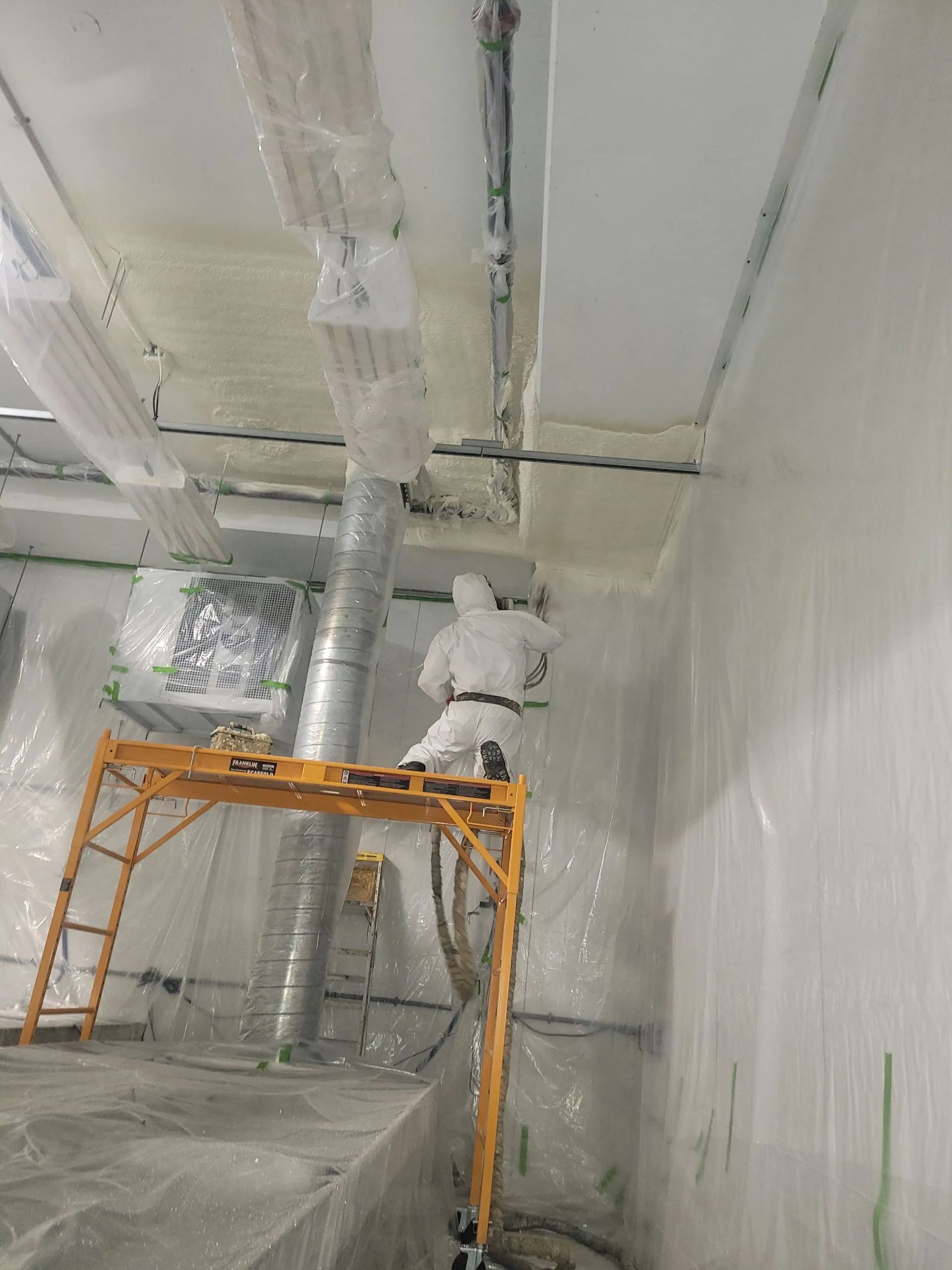
Closed-cell spray foam delivers the highest R-value per inch and doubles as an air and vapor barrier, making it particularly valuable in tight spaces like rim joists, crawl space walls, and roof lines with limited depth.
Can I add insulation on top of existing insulation in my attic?
Yes, in most cases. Blown-in insulation can be added over existing batts to reach the recommended depth, provided the existing material is dry, undamaged, and air sealing has been addressed at the attic floor level first.