
Why Energy-Efficient Upgrades Like Insulation Matter in Monmouth County
August 19, 2026
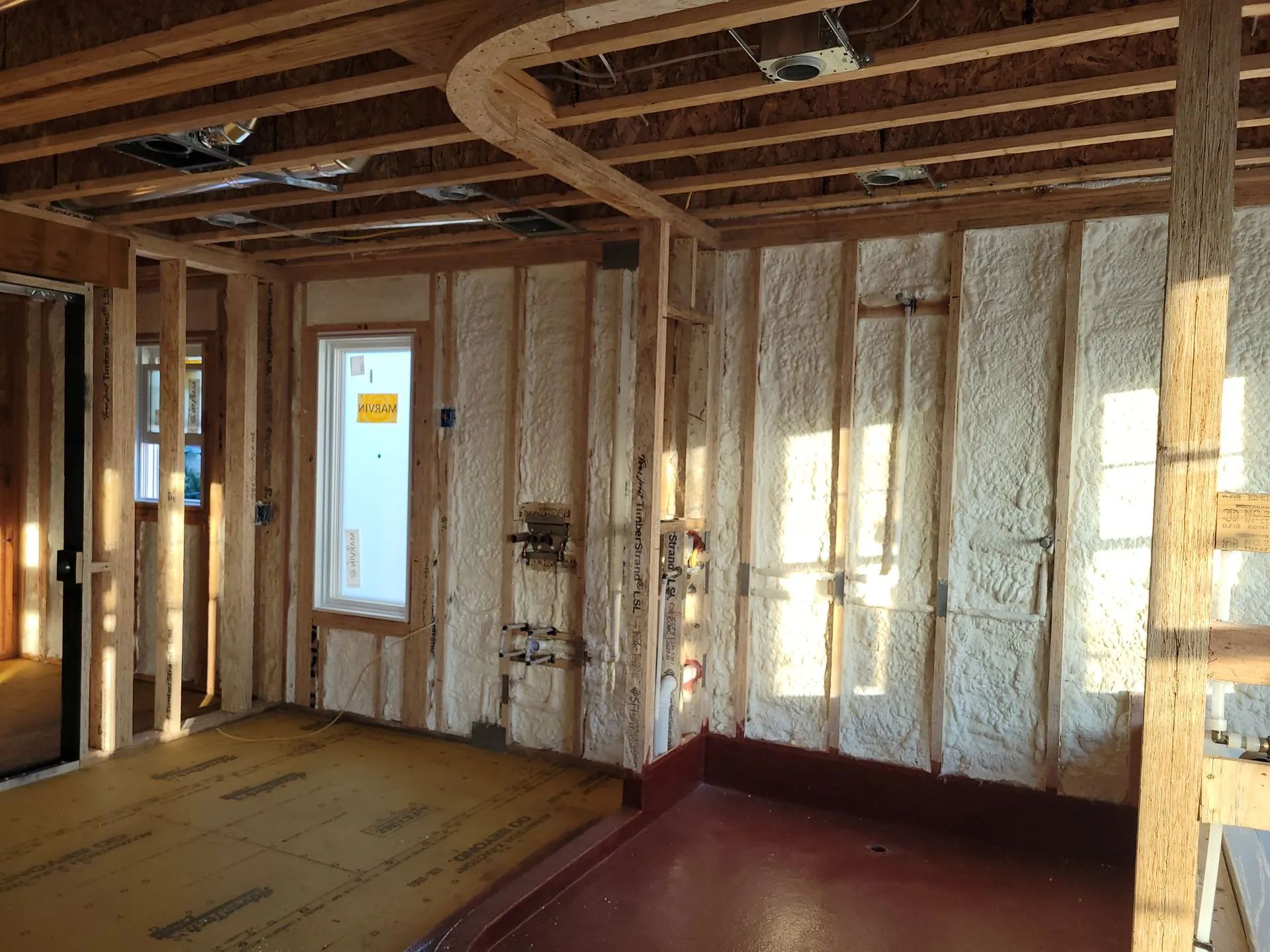
Quick Answer: Energy-efficient upgrades like insulation matter in Monmouth County because the area's swing between humid, salt-heavy summers and cold coastal winters puts constant strain on a home's heating and cooling systems. Insulation and air sealing close the gaps that let conditioned air escape and outside air intrude, which is why the Department of Energy recommends attic insulation levels of R-38 to R-60 for this climate zone. Beyond comfort, New Jersey utilities including PSE&G and JCP&L run rebate and financing programs for qualifying insulation and weatherization projects, and the state-administered New Jersey Clean Energy Program offers additional support, including no-cost weatherization for income-qualified households. Rebate amounts, eligibility rules, and program names change from year to year, so homeowners should confirm current details directly with their utility or at njcleanenergy.com before starting a project. Combined with a professional home energy assessment, these programs can meaningfully offset the cost of the exact upgrades that make the biggest difference in an older Jersey Shore home.
How Monmouth County’s Climate Exposes Insulation and Air-Sealing Problems
The furnace in a Colts Neck colonial kicks on at 6 a.m. in January and doesn’t fully shut off until well past breakfast, because the upstairs bedrooms lose heat almost as fast as the system can produce it. Six months later, that same house is running the air conditioner nonstop through a sticky Jersey Shore August, fighting humidity that seeps in through the same gaps the cold air used all winter. You start treating both seasons as something to survive instead of something to actually live through, and the utility bill backs that feeling up every month.
That pattern shows up across Monmouth County constantly, and it rarely traces back to an old furnace or a tired air conditioner. More often, the equipment is doing exactly what it’s built to do, straining against a building envelope that lets conditioned air leak out and unconditioned air leak in. Insulation and air sealing are the upgrades that fix that root cause. They’re also the upgrades most likely to qualify for New Jersey utility rebates and state-level efficiency incentives, which changes the math on a project that was already worth doing for comfort alone.
Why Monmouth County’s Climate Is Tougher on a Home Than People Realize
New Jersey homes don’t just deal with one hard season. They deal with two, back to back, and each one exposes a different weakness in an under-insulated house.
Cold, damp winters draw heat out fast
Monmouth County sits close enough to the water that winter air carries more moisture than an inland climate, and moist cold air pulls heat out of a building faster than dry cold air does. An attic with thin or settled insulation loses warm air straight up through the ceiling plane, which is why upstairs rooms in older homes are so often the coldest ones in the house.
Humid summers turn air conditioning into a moisture-removal job, not just a cooling job
Jersey Shore summers push both temperature and humidity high at once, so the air conditioner isn’t just lowering the temperature. It’s also pulling moisture out of the air, over and over, because gaps in the envelope let humid outside air keep sneaking in. Every bit of that damp air is work the system already did once and now has to redo.
Coastal moisture and salt air wear on building materials faster
Homes closer to the water deal with salt-laden air and higher humidity year-round, which makes moisture control in walls, attics, and crawlspaces more important than it would be further inland. Old, compressed insulation offers almost no resistance to that moisture load.
And a lot of Monmouth County’s housing stock predates modern efficiency standards
Many towns in the service area, including Colts Neck, Freehold, Middletown, and Red Bank, have a large share of homes built decades before current insulation practices were standard. The attic insulation in these houses is often thin, settled, or flat-out missing in key spots. Nobody designed it for today’s heating and cooling loads.
Add those together and a house that would feel merely uncomfortable in Ohio or Colorado can feel flat-out hard to live in here. The envelope is doing more work in both directions, all year long.
How Insulation Actually Translates Into Energy Savings
The relationship between insulation and a lower utility bill isn’t abstract. It comes down to slowing heat transfer through specific parts of the house, and some parts matter a lot more than others.
The attic is where most of the heat loss happens
Heat rises. In an under-insulated home, a large share of total heat loss occurs straight through the ceiling and attic plane rather than through the walls or windows. That’s why attic insulation is usually the first thing a home energy assessment flags, and why it tends to be the highest-priority upgrade for both comfort and cost.
R-value measures resistance to heat flow, and New Jersey needs more of it than warmer states
New Jersey falls within Climate Zone 4, with northern counties reaching into Zone 5, and the Department of Energy's recommended insulation levels reflect that. For attics, that generally means R-38 to R-60. Wall cavities typically call for R-13 to R-21 depending on framing depth, floors over unheated spaces like garages need roughly R-25 to R-30, and rim joists benefit from R-19 to R-25. A home running well below those levels is losing conditioned air it paid to produce.
Different materials deliver that resistance differently, per inch of thickness
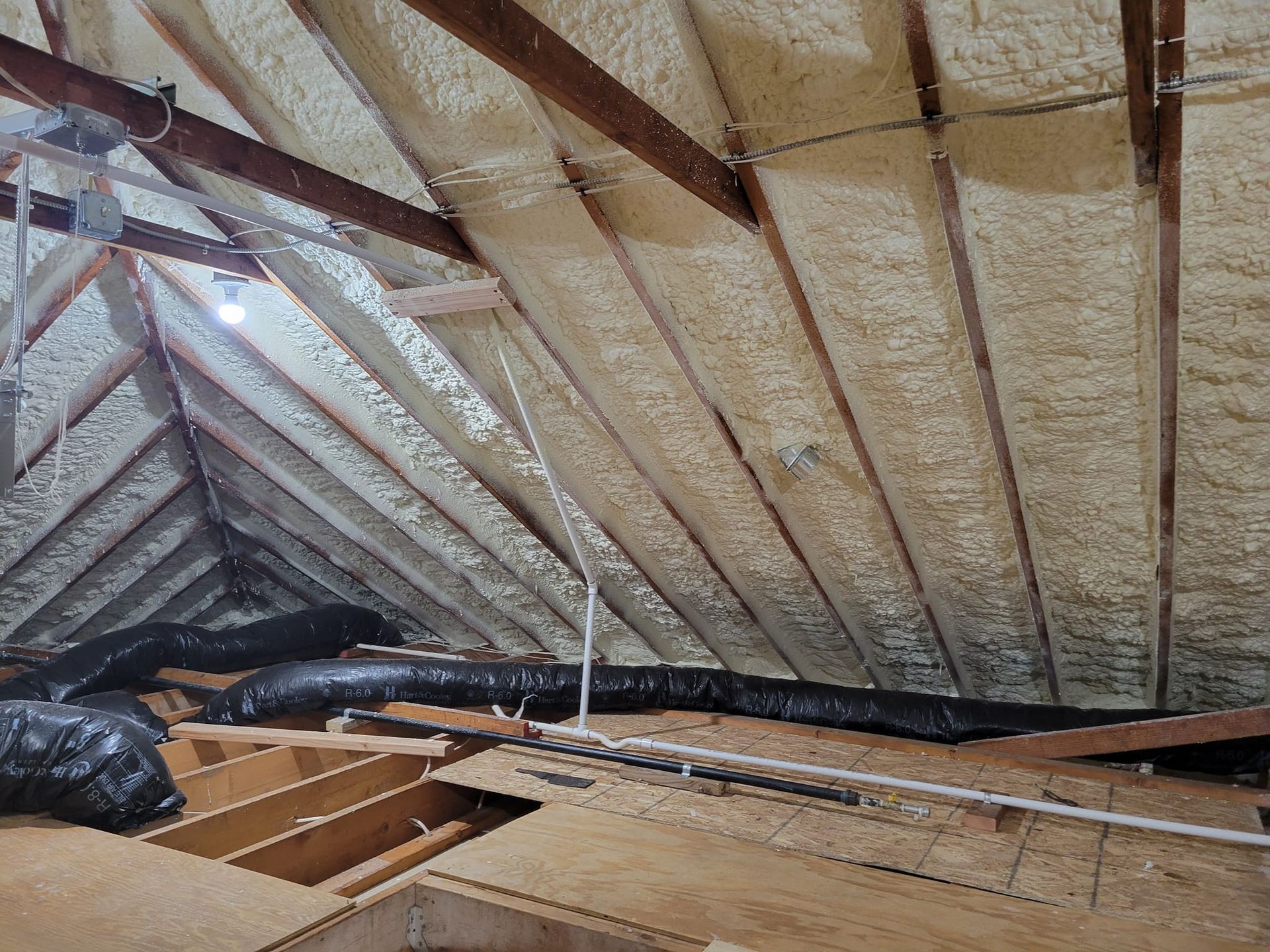
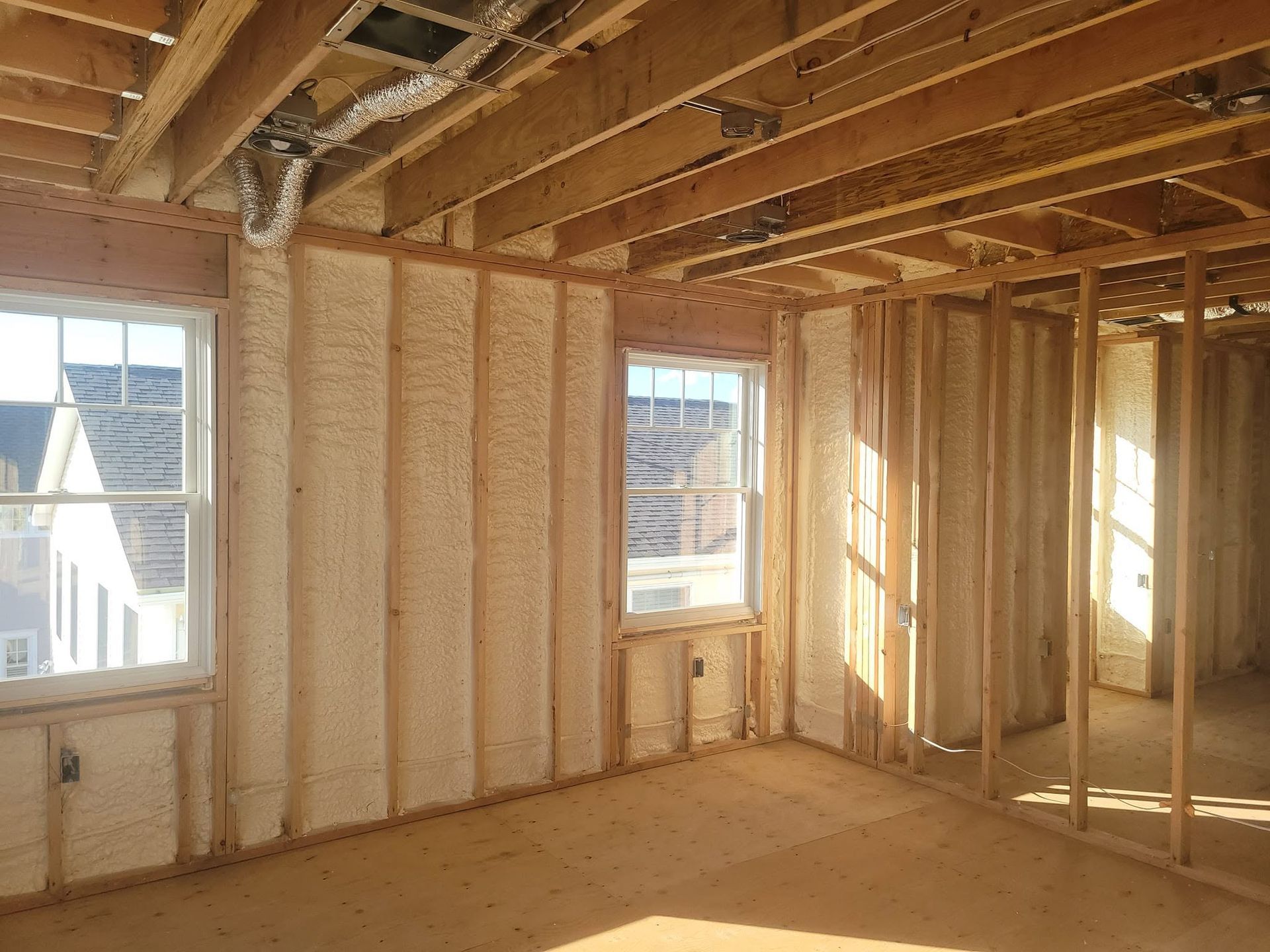
Closed-cell spray foam provides roughly R-6.5 per inch, open-cell spray foam around R-3.7 per inch, and fiberglass batts typically fall between R-2.9 and R-3.8 per inch. That difference matters most in tight spaces, like rim joists or cathedral ceilings, where there isn’t room to stack enough of a lower-density material to hit the recommended level.
Air sealing multiplies the benefit of the insulation itself
Insulation slows heat transfer through a material, but it doesn’t stop air from moving through gaps around it. Sealing those gaps before insulating is what allows a home’s HVAC system to stop fighting constant infiltration, and it’s a major reason properly air-sealed attics can meaningfully cut heating and cooling costs and reduce how hard the HVAC system has to work to hold a set temperature.
None of this requires guesswork. A home energy assessment measures current insulation levels against these benchmarks and identifies exactly where a house is falling short, which is also the information a utility program typically wants before approving a rebate.
What a Home Energy Assessment Actually Checks
Whether it’s arranged through a utility program or done independently, a home energy assessment is the step that turns “the house feels drafty” into an actual plan.
Insulation levels get measured against the recommended benchmarks for the climate zone, room by room, rather than assumed from the home’s age or general appearance. An attic can look insulated and still fall well short of R-49 once it’s actually checked, especially if the material has settled or shifted over the years.
Air leakage gets identified at its actual sources. Common culprits include attic bypasses around chimneys and plumbing stacks, gaps around recessed lighting, rim joists in the basement, and areas where additions meet the original structure. These are rarely visible without someone specifically looking for them.
Moisture risk gets flagged, which matters more near the coast. An assessment in a Monmouth County home should also account for how warm, moist air behaves when it meets a cold surface inside a wall or attic, since that’s the mechanism behind condensation, mold, and mildew in this climate. Choosing a moisture-resistant option like closed-cell spray foam in the right spots addresses that risk directly rather than as an afterthought.
The findings become the basis for both the project scope and the rebate application, since most utility programs want documentation of current conditions and projected savings before approving an incentive.
Matching the Right Insulation to the Right Part of the House
Not every room or cavity calls for the same material, and getting this match right is part of what determines whether the upgrade performs the way the R-value numbers suggest it should.
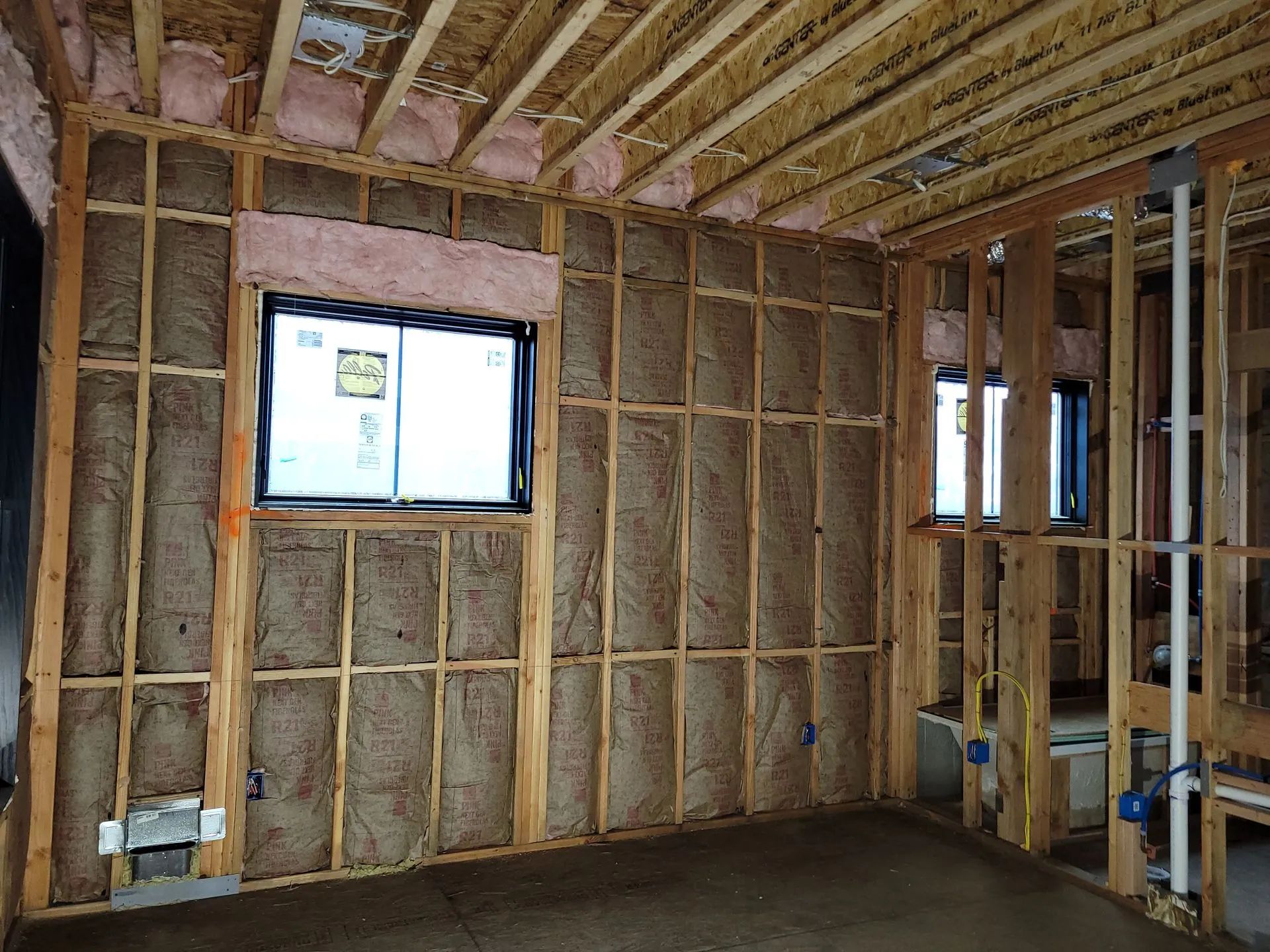
Attics generally benefit from blown-in cellulose or fiberglass for broad, gap-filling coverage, since these materials fill irregular spaces between joists more completely than batts alone. Batt insulation still has a role in accessible, regularly shaped areas.
Rim joists and other tight, moisture-exposed cavities favor spray foam. Closed-cell spray foam’s higher R-value per inch and moisture-resistant properties make it well suited to spaces where there isn’t room to stack enough of a lower-density material, and where dampness is a recurring concern, like basement rim joists in a home near the water.
Crawlspaces and basement walls need a plan for both insulation and vapor control, since these areas sit closest to ground moisture and are common entry points for damp air working its way into the rest of the house.
Commercial buildings in the area face similar climate pressure with added considerations around larger envelopes and mixed-use spaces, which is why commercial insulation projects typically start with the same kind of assessment used for residential work, scaled to the building.
Warning: Skipping air sealing and going straight to adding insulation on top of existing material is a common mistake that limits how much benefit a project delivers. If warm, moist air can still find its way to a cold surface through an unsealed gap, added insulation won’t stop the condensation and moisture problems that gap is causing, and it may trap that moisture in place instead.
Frequently Asked Questions
How much can insulation realistically lower energy bills in a Monmouth County home?
Insulation savings vary by home size, existing insulation, and air leakage. Improving attic insulation toward the R-38 to R-60 range, combined with air sealing, can significantly improve comfort and energy efficiency year-round.
Is spray foam or fiberglass insulation better for New Jersey’s humid summers?
Both materials can work well in New Jersey. Closed-cell spray foam suits moisture-prone areas, while blown-in fiberglass works well across attics. Proper material selection depends on the specific space and application.
Do older homes in Monmouth County qualify for income-based weatherization assistance?
Income-qualified households may receive weatherization assistance through PSE&G programs or broader New Jersey Clean Energy initiatives. Eligibility depends on household size, income, and current program guidelines and requirements established annually.
Why does air sealing need to happen before or during insulation work for rebate eligibility?
Air sealing should happen before or during insulation because insulation cannot stop airflow through gaps. Proper sequencing improves efficiency, supports program requirements, and helps prevent potential moisture problems inside your home.
What R-value should attic insulation have in a Monmouth County home?
For New Jersey homes, attic insulation is generally recommended in the R-38 to R-60 range. Older Monmouth County homes often fall below this range because insulation settles, compresses, or deteriorates over time.
A More Efficient Home Through Every Season
Monmouth County homes face a demanding cycle of cold winters and humid summers, making insulation and air sealing important for maintaining consistent indoor comfort. When conditioned air escapes through poorly insulated attics, rim joists, crawlspaces, and other gaps, heating and cooling equipment must work harder to maintain the desired temperature. Bringing insulation closer to recommended levels while addressing air leakage can help reduce unnecessary energy loss and create a more balanced indoor environment throughout the year.
With155 years of experience, Top to Bottom Insulation
serves homeowners throughout Monmouth County, NJ, with a practical understanding of the
insulation
challenges found in older and coastal-area homes. The right improvements depend on the home's existing insulation, construction, moisture conditions, and areas of air leakage, so a targeted approach is more effective than simply adding insulation everywhere. When those weaknesses are properly identified and addressed, homeowners can create a tighter, more comfortable home that is better prepared for both New Jersey winters and Jersey Shore summers.